
- Home
- Eye Health
- Eyewear Guide
Eyewear Guide
How To Choose Glasses, Contact Lenses And Sunglasses
Everything to know before you buy new eyewear, from reading your prescription to choosing lenses, frames and sunglasses, and caring for them once they're yours. When you're ready, find an eye doctor near you on My Eye Doctor for an eye exam or contact lens fitting.

- Your prescription
- Glasses
- Frames
- Contact lenses
- Sunglasses
- Kids and sports
- Care tips
- Buying online
- Find a doctor
Eyewear At A Glance
- Your eye doctor must give you your prescription after the exam, free of charge, and you can buy eyewear anywhere.
- Glasses and contact lens prescriptions are different. Contacts need a separate fitting.
- Choose polycarbonate or Trivex lenses for children and sports.
- Sunglasses should block 100% of UVA and UVB rays, sometimes labeled UV400.
- Never use water or saliva on contact lenses or their case.
- Eye pain, redness or sudden vision change with contacts? Take them out and call your eye doctor.
Great Eyewear Starts With An Eye Exam
Your eyewear is only as good as the prescription behind it. An up-to-date eye exam makes sure your new glasses or contacts help you see clearly and comfortably.
Glasses Prescription
Shows the lens power you need for each eye. You get it after a refractive eye exam, and it's yours to use at any store.
Contact Lens Prescription
Needs a separate contact lens fitting. It adds the lens brand, base curve and diameter, which a glasses prescription doesn't include.
Eye Health Check
The same visit checks for glaucoma, cataracts and other conditions, so new eyewear is a good reminder to get a full eye exam.
How To Read Your Glasses Prescription
Prescriptions use short codes. Tap any term on this sample prescription to see what it means.
Sample Glasses Prescription
Sample onlyThe main lens power, measured in diopters. A minus number means you're nearsighted, and a plus number means you're farsighted. The bigger the number, the stronger the lens.
A glasses prescription isn't the same as a contact lens prescription. Ask your eye doctor for both if you plan to wear contacts.
Choosing The Right Glasses Lenses
The right lenses make a big difference to how well you see and how comfortable your glasses feel. Compare the main options below.
- Single VisionMost common
One power across the whole lens, for distance, reading or computer use.
- Bifocal
Two zones with a visible line, with distance vision on top and reading at the bottom.
- ProgressiveNo line
A smooth change from distance to arm's length to reading, with no visible line. Most people adjust within two weeks.
- Reading Glasses
Magnify close-up tasks. Ready-made readers suit some people, but an exam also checks your eyes are healthy.
- Computer Glasses
Set for screen distance to ease strain during long days at a computer.
- Myopia Control LensesFor kids
Special lenses that can slow nearsightedness from getting worse in children.
- Standard Plastic
Clear optics at a low cost. Lenses get thicker with stronger prescriptions.
- PolycarbonateImpact resistant
Light, thin and tough, with built-in UV protection. A top choice for children and sports.
- TrivexImpact resistant
As tough and light as polycarbonate, with slightly sharper optics.
- High-Index
Thinner, lighter lenses that look better in strong prescriptions.
- Glass
Very scratch resistant but heavy and can shatter, so it's rarely used today.
- Not Sure Which?
Your optician can suggest the best material for your prescription, lifestyle and budget.
- Anti-Reflective
Cuts glare from screens and headlights and makes lenses look almost invisible.
- Scratch-Resistant
A hard coat that helps lenses last longer. Most lenses include it.
- UV Protection
Blocks harmful ultraviolet rays. Polycarbonate and high-index lenses include it.
- Light-Adjusting
Photochromic lenses darken outdoors and clear up again indoors.
- Polarized
Reduces glare from water, snow and roads. Ideal for sunglasses and driving.
- Blue Light FilteringOptional
May make screen time feel more comfortable for some people, but it isn't needed to protect your eye health.
Find Frames That Fit Your Face
Choose your face shape for frame ideas. The best frame is one that fits well and that you love wearing.
Most frame shapes suit you. Choose frames as wide as, or slightly wider than, the broadest part of your face.
Quick Fit Checklist
- Your eyes sit near the center of each lens
- The frame is about as wide as your face
- Your glasses don't slide down when you look down
- The arms rest on your ears without pinching
- Nose pads feel comfortable and don't leave deep marks
Contact Lenses Guide
Contact lenses are medical devices, so they need a prescription and a fitting from an eye doctor. Here are the main types.
- Daily Disposable
A fresh pair every day, so there's no cleaning or storing.
- Two-Week And Monthly
Replaced on a schedule and cleaned with solution every night.
- Toric
Designed to correct astigmatism.
- Multifocal
Help you see near and far after your 40s.
- Rigid And Scleral
Firm lenses for sharp vision, keratoconus or irregular corneas.
- Colored LensesPrescription needed
Even cosmetic lenses need a prescription and fitting. Never buy them from costume or beauty shops.
Contact Lens Do's
- Wash and dry your hands before touching your lenses
- Rub and rinse lenses with fresh solution, never old solution
- Replace your lenses as often as your eye doctor says
- Replace your lens case at least every three months
- Carry backup glasses in case you need to take your lenses out
Contact Lens Don'ts
- Never use water or saliva on your lenses or case
- Don't sleep in lenses unless your eye doctor says it's safe
- Don't wear lenses while showering, swimming or in a hot tub
- Don't top up old solution in your case
- Eye pain, redness or blurry vision? Take lenses out and call your eye doctor

Sunglasses And UV Protection
Sunlight can damage your eyes over time and raise the risk of cataracts and other problems. Good sunglasses are eye protection, not just style.
- Look for 100% UVA and UVB protection, sometimes labeled UV400
- Darker lenses don't always mean more UV protection, so check the label
- Polarized lenses cut glare from water, snow and roads
- Wraparound styles block light coming in from the sides
- Children need sunglasses and wide-brimmed hats too
- Prescription sunglasses or light-adjusting lenses help you see clearly in the sun
Eyewear For Kids, Work And Sports
Active eyes need tougher eyewear. Here's what to look for.
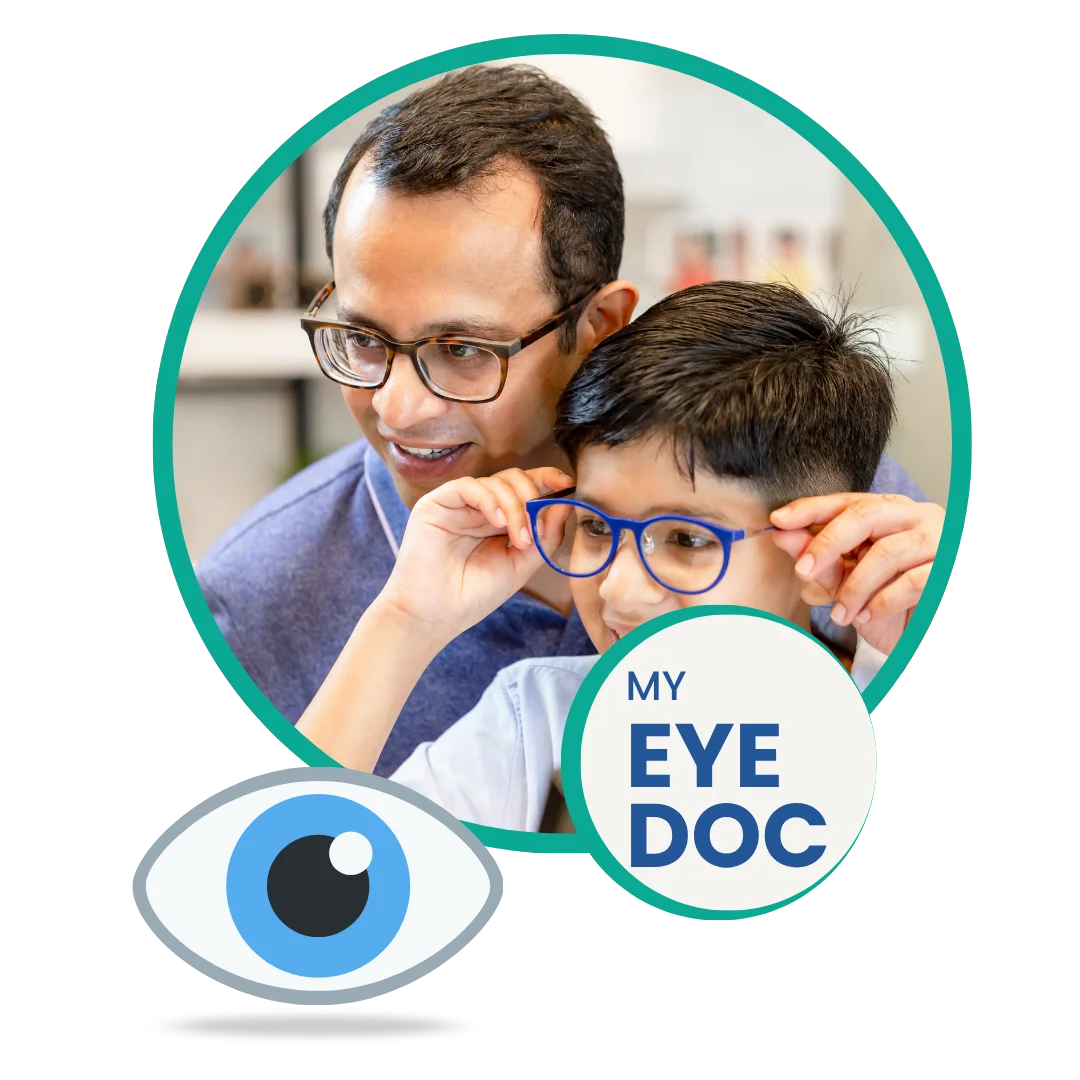
Kids' Glasses
Children are busy and active, so their glasses need to be tough, comfortable and fitted with care.
- Choose polycarbonate or Trivex lenses for impact protection
- Look for flexible frames and spring hinges
- Use a strap for babies and toddlers
- Check the fit often as your child grows

Safety And Sports Eyewear
Most eye injuries at home, at work and during sports can be prevented with the right protective eyewear.
- For work and home projects, look for the ANSI Z87.1 safety marking
- For racquet sports and basketball, choose goggles that meet ASTM F803
- Everyday glasses are not safety glasses
- Prescription safety glasses and sports goggles are available

How To Care For Your Glasses
A little daily care keeps your lenses clear and your frames fitting well for longer.
- Rinse Before Wiping
Rinse lenses under lukewarm water to wash away dust and grit first.
- Use Mild Soap
A drop of lotion-free dish soap or lens cleaner lifts oils and smudges.
- Dry With Microfiber
Use a clean microfiber cloth, never paper towels, tissues or your shirt.
- Store In A Case
Keep glasses in a hard case when you're not wearing them.
- Avoid Heat
Don't leave glasses in a hot car, which can damage coatings and bend frames.
- Get Adjustments
Visit an optician to tighten screws and adjust frames that slip or pinch.
Signs It's Time For New Eyewear
Your eyes change over time, and so does your eyewear. Book an eye exam if you notice any of these.
Your Vision Has Changed
- You squint to read signs or screens
- You hold your phone farther away to read it
- You get headaches or tired eyes after reading or screen time
- Night driving feels harder, with more glare
- It's been more than a year or two since your last eye exam
Your Eyewear Has Worn Out
- Lenses are scratched or the coating is peeling
- Frames are bent, loose or keep slipping
- Contacts feel dry or uncomfortable by the end of the day
- Your sunglasses don't show UV protection
- Your eyewear no longer suits your work or hobbies
Your Right To Your Prescription
Under the FTC's Eyeglass Rule and Contact Lens Rule, your eye doctor must give you a copy of your glasses prescription after your eye exam, and your contact lens prescription after your contact lens fitting. It's free, you don't have to ask, and you can use it to buy eyewear anywhere you choose.
- You may be asked to sign that you received your prescription
- Contact lens prescriptions are valid for at least one year unless there's a medical reason for a shorter date
- How long a glasses prescription lasts depends on your state and your eye doctor
Learn more from the Federal Trade Commission.
Buying Glasses And Contacts Online Safely
Your prescription works online too. These checks help you get eyewear that fits and is safe to wear.
Glasses Online
- Have your current prescription ready, and check it hasn't expired
- You'll usually need your pupillary distance (PD). It isn't always on your prescription, so ask the office or have it measured
- Check the frame size numbers on the arm of glasses that fit you well
- Read the return and remake policy before you order
- Strong prescriptions and progressives are often easier to get right in person
Contact Lenses Online
- The seller must verify your prescription with your eye doctor before shipping
- Only buy from sellers that ask for your prescription or your doctor's details
- Order the exact brand, base curve and diameter on your prescription
- Never swap brands without a new fitting
- Be wary of sites selling colored or costume lenses with no prescription
Paying For Glasses And Contacts
Most people can lower the cost of eyewear with insurance or tax-free health accounts.
Vision Insurance
Most vision plans give an allowance for frames, lenses or contacts every 12 or 24 months. Find doctors who accept your plan.
HSA And FSA
Prescription glasses, contact lenses, prescription sunglasses and eye exams are usually eligible expenses. Keep your receipts.
Paying Yourself
Ask about exam and eyewear prices up front, and remember your prescription is yours to use at any store.
Find An Eye Doctor Near You For Glasses And Contacts
Choose what you need and your state to see eye doctors on My Eye Doctor, then request an eye exam or contact lens fitting online.
Eyewear Questions
Quick answers about glasses and contacts. For booking and insurance questions, see our full FAQ.
How long is a glasses prescription valid?
It depends on your state and your eye doctor, but most glasses prescriptions are written for one to two years. If your vision has changed, book an exam even if your prescription hasn't expired.
Can I use my glasses prescription to buy contact lenses?
No. Contact lenses sit directly on your eye, so you need a separate contact lens prescription from a fitting. It lists the lens brand, base curve and diameter, which a glasses prescription doesn't include.
Do I need a prescription for colored contact lenses?
Yes. All contact lenses, including colored and costume lenses, are medical devices that need a prescription and a proper fitting. Lenses bought without a prescription can cause serious eye infections.
Can I buy glasses or contact lenses online?
Yes. You can use your prescription at any store, including online. A contact lens seller has to verify your prescription with your eye doctor before shipping, and an online glasses order usually needs your pupillary distance (PD) as well.
How long does it take to get used to new glasses?
Most people adjust within a few days, and progressive lenses can take up to two weeks. If your vision is still blurry or you keep getting headaches after that, ask your eye doctor to check your prescription and the fit.
What is the best lens material for children's glasses?
Polycarbonate or Trivex. Both are light and highly impact resistant, which helps protect active kids' eyes, and polycarbonate includes UV protection.
How often should I replace my glasses?
Replace them when your prescription changes, which is often every one to two years, or sooner if your lenses are scratched or your frames no longer fit well.
Helpful Pages
- Find Eye DoctorsBrowse by specialty, location and insurance.
- Book AppointmentRequest an eye appointment online.
- Eye HealthConditions, symptoms and eye exam guides.
- InsuranceFind eye doctors who accept your plan.
- FAQAnswers about booking, insurance and eye exams.
- ContactEmail our team or find our office.
My Eye DoctorEyewear guide and eye doctors near you
Last updated
This guide is written by the My Eye Doctor team using guidance from the Federal Trade Commission, the CDC, the FDA, the American Academy of Ophthalmology and the American Optometric Association. It is general information, not medical advice. My Eye Doctor is a directory and doesn't sell eyewear.