

Most people treat their eyes the way they treat the boiler. No attention at all until something goes audibly wrong, and then a great deal of panic.
The trouble is that the conditions most likely to take your sight do not go audibly wrong. They are painless. They begin at the edges of your vision, or in one eye while the other quietly compensates, and the brain is so good at filling in the gap that people routinely lose a meaningful share of their visual field before they notice anything at all. By the time a symptom finally arrives, the damage is often permanent.
That single fact reorganises everything about eye health. It means the useful work is not reacting well. It is checking on a schedule, protecting what you have, and knowing which handful of symptoms genuinely cannot wait until Monday.
What follows is the practical version of what optometrists repeat all day: how often to actually get examined, what the exam is looking for, which lifestyle factors have real evidence behind them, which popular advice is folklore, and where good vision care crosses over into the rest of your health. Most of it is unglamorous. Nearly all of it is free.
Start With the Exam Schedule You Are Probably Ignoring
Ask two professional bodies how often a healthy adult needs an eye exam and you get two different answers. That is not evasion, it is a genuine disagreement about where the benefit outweighs the cost, and knowing both lets you make an informed choice rather than guessing.
| Age | Optometric guidance (AOA) | Ophthalmology guidance (AAO) |
|---|---|---|
| Under 40, low risk | At least every two years, with recent guidance leaning towards annually | Every five to ten years, with a baseline exam at 40 |
| 40 to 54 | At least every two years | Every two to four years |
| 55 to 64 | At least every two years | Every one to three years |
| 65 and over | Annually | Every one to two years |
| Anyone at higher risk | Annually, or as advised | More often, set case by case |
The AOA sets out its recommended examination intervals by age and risk, while the AAO urges a baseline eye disease screening by age 40 for everyone, on the grounds that this is when the common age-related diseases start showing their first signs.
Higher risk is a broader category than most people assume. It includes diabetes, high blood pressure, a family history of glaucoma or macular degeneration, contact lens wear, a high prescription, previous eye surgery or injury, certain long-term medications, and being of African or Hispanic descent, since glaucoma risk is higher in those populations. If any of those apply, take the shorter interval and do not wait for symptoms.
It is also worth knowing what you are booking. A sight test at a high street optician that lasts ten minutes and ends with a prescription is not the same thing as a comprehensive examination, which includes a proper look at the structures inside the eye. When you book, ask whether a dilated retinal examination or retinal imaging is included. Protecting your eye health depends far more on what happens at the back of the eye than on the letters you read off the chart.
The Diseases That Give You No Warning
This is the part that justifies the whole schedule. Three of the leading causes of sight loss announce themselves late or not at all.
Glaucoma damages the optic nerve, usually without pain, and takes peripheral vision first. The loss creeps inward so gradually that the brain papers over it. According to the National Eye Institute, roughly half of people with glaucoma do not know they have it, and vision already lost cannot be restored. Treatment, usually drops that lower eye pressure, is good at halting progression. It just cannot undo what came before, which is the entire argument for catching it early.
Age-related macular degeneration attacks central vision rather than the periphery. Early on, you may notice nothing, because the other eye compensates while you are using both. A simple home check helps here. Cover one eye, look at a doorframe or a line of tiles, and see whether the straight line looks bent, wavy or interrupted. Do it with each eye separately, once a month, especially after 55.
Diabetic retinopathy is the one with the clearest preventive story. High blood sugar damages the tiny vessels in the retina long before vision changes. Anyone with diabetes needs a dedicated retinal screening on the schedule their diabetes team sets, which is typically annual, and attending it reliably is one of the highest-value things you can do for your eye health.
A practical note on dilation. Drops that widen the pupil are the reason an examiner can see the retina properly, and they are the reason some people skip the appointment. They sting briefly, blur your near vision and leave you light sensitive for a few hours. Bring sunglasses, do not plan to drive straight afterwards, and accept the afternoon as the cost of a proper look.
And a reassurance worth stating plainly. None of this means you are likely to go blind. It means that a short, painless appointment is the only point at which these conditions are visible while they are still easy to treat.
Your Eyes Are Downstream of the Rest of You
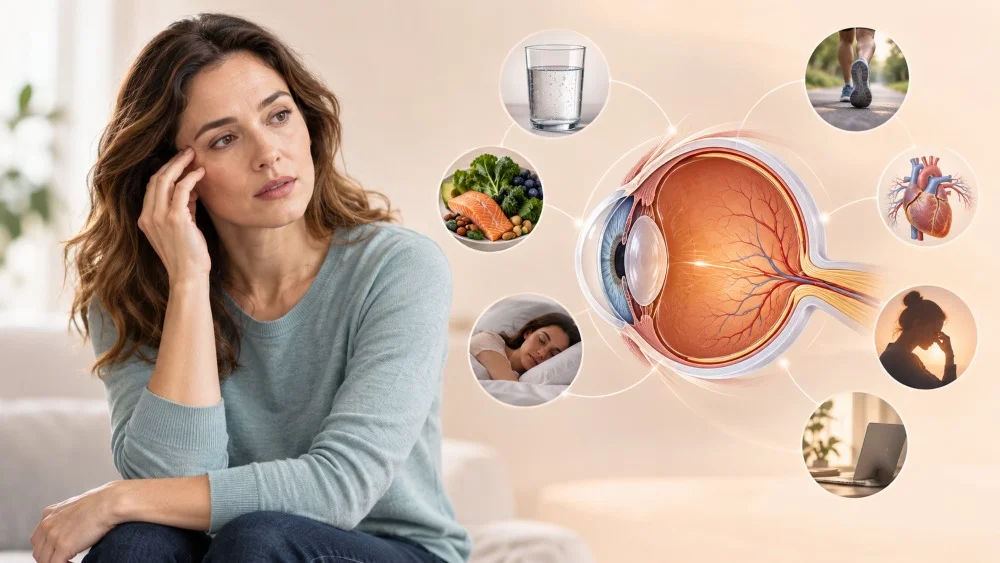
The retina is the only place in the body where a doctor can look directly at living blood vessels and nerve tissue without cutting anything open. That is why an eye exam sometimes catches problems that have nothing to do with sight, and why general health decisions show up in your eyes first.
Stopping smoking is the single biggest modifiable factor. Smokers develop macular degeneration substantially earlier than non-smokers, and the World Health Organization reports that living with a smoker roughly doubles a person’s risk of age-related macular degeneration from second-hand smoke. Smoking also raises the risk of cataract and worsens diabetic eye disease. Quitting at any age reduces the risk, which is the rare piece of health advice that works even when it arrives late.
Blood sugar control is eye care. For anyone with diabetes, how well glucose is managed over years is more predictive of retinal damage than almost anything an optometrist can do afterwards. The screening appointment finds the damage. Control is what prevents it.
Blood pressure matters more than people realise. Hypertension damages the same small retinal vessels, and it contributes to a group of vascular problems in the eye, including the retinal vein occlusions that cause sudden painless vision loss.
Keep moving. Regular physical activity is associated with lower rates of several eye conditions, probably through the same vascular mechanisms that make it good for the heart. You do not need a separate eye regime. The things that are good for your circulation are good for your eye health.
Mention your full medical history and medication list at every eye appointment. Steroids can raise eye pressure, some drugs used for arthritis require retinal monitoring, and a few blood pressure medicines affect the eye surface. Your optometrist cannot account for what they do not know.
Food and Supplements, Separated From the Marketing
The eye supplement aisle is large, expensive and mostly aimed at people it was never studied in. Here is the line between evidence and sales copy.
The real research is the Age-Related Eye Disease Study and its sequel. The National Eye Institute reports that the AREDS and AREDS2 formulations cut the risk of progressing from intermediate to advanced macular degeneration by about 25 percent, and that they do not prevent AMD from developing in the first place. That second clause is the one the packaging tends to leave out.
What this means in practice:
- If you have intermediate AMD, or advanced AMD in one eye, the formulation has good evidence and is worth discussing with your eye doctor.
- If you have healthy eyes, or only very early changes, there is no evidence it does anything for you. Buying it as insurance is buying nothing.
- Dose and composition matter, and these are high doses rather than a general multivitamin. Do not improvise your own version.
- The original formula contained beta-carotene, which was replaced because of raised lung cancer risk in smokers and former smokers. If you have ever smoked, this detail is important, so check the label and ask.
AREDS2 also tested adding omega-3 and found no additional overall benefit, which is worth knowing before you buy fish oil for your eyes specifically.
Food is the less exciting answer and the better general one. Leafy greens such as kale and spinach, brightly coloured vegetables, oily fish, eggs, nuts and seeds supply the pigments and fatty acids concentrated in the retina. No single food is protective on its own, and eating well will not reverse an existing condition. But a broadly Mediterranean pattern of eating is associated with lower rates of AMD, and it has the advantage of being good for the blood vessels that feed the eye in the first place.
If you want one practical instruction: get something dark green on the plate several times a week, and put the money you would have spent on unnecessary supplements towards the eye exam instead.
Treat Sunglasses as Equipment, Not Accessories
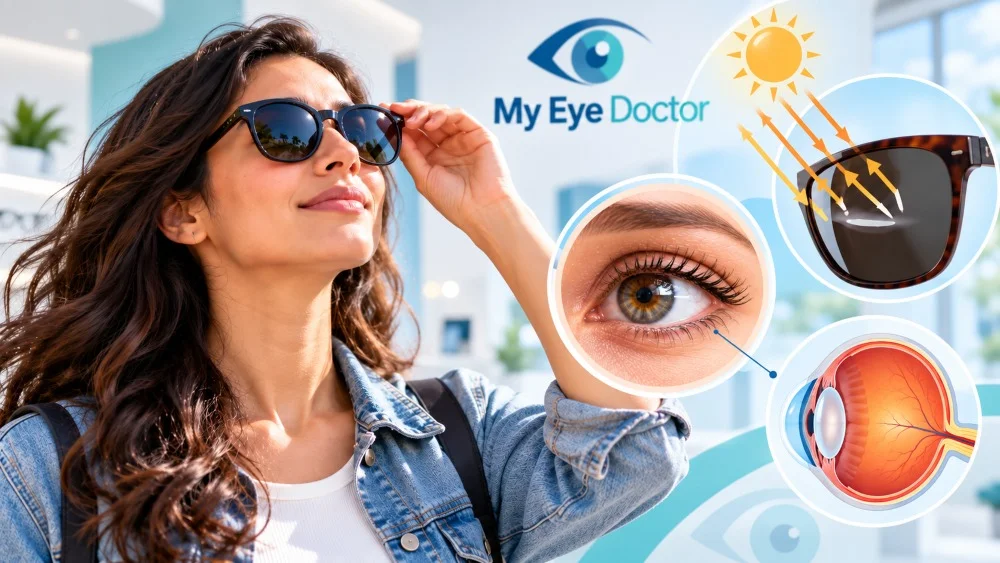
Ultraviolet damage to the eye accumulates over a lifetime and cannot be undone. It contributes to cataract, to pterygium, which is the fleshy growth that creeps from the white of the eye onto the cornea, to sunburn of the cornea after intense exposure, and to skin cancers on the eyelids, which are thin and easy to forget about.
What to actually look for:
- A label stating 100 percent UV protection, or UV400. This is the only specification that matters, and it is the one most people never check.
- Darkness is not protection. A dark lens without a UV filter is worse than no sunglasses at all, because the tint opens your pupil wider and lets more ultraviolet through. This is the reason cheap unlabelled novelty sunglasses are a genuinely bad buy.
- Price tells you nothing. Inexpensive sunglasses with a proper UV rating outperform expensive ones without.
- Bigger and wrapped is better. Light arrives from the sides and from above, so larger lenses and close-fitting frames block considerably more than small ones.
- A wide-brimmed hat does real work, cutting a large share of the UV reaching your eyes before the sunglasses even get involved.
Timing matters more than the season. Ultraviolet exposure peaks in the middle of the day, passes straight through cloud, and reflects off water, sand, concrete and especially snow, where the reflected dose can exceed the direct one. Winter sun low in the sky can be worse than summer sun overhead.
Children deserve particular attention here. The lens inside a young eye is clearer than an adult’s and lets more ultraviolet reach the retina, so a significant share of lifetime exposure happens before adulthood. Proper sunglasses with a real UV rating, and a hat, are a sound investment in long-term eye health. Toy sunglasses with no label are not.
One exception worth stating. Never look directly at the sun, with or without sunglasses, and never view a solar eclipse through sunglasses, camera lenses or smoked glass. That requires certified eclipse filters, and the retinal burn it causes is painless and permanent.
Contact Lenses and Makeup: Where Small Habits Turn Serious
Most of this guide is about slow risks measured in decades. This section is not. Contact lens misuse causes corneal infections that can destroy sight in days, and the behaviours that cause them are extremely ordinary.
The single worst habit is sleeping in lenses. CDC case reports on corneal infections link sleeping in contact lenses to a six to eightfold increase in infection risk, and roughly a third of wearers admit to sleeping or napping in them. Even lenses approved for overnight wear carry more risk than taking them out.
The rest of the list is short and worth following exactly:
- Keep all water away from lenses. No showering, swimming or hot tubs in them, and never rinse lenses or a case with tap water. Acanthamoeba, a waterborne organism, causes a rare infection that is agonising and extremely difficult to treat.
- Never top up old solution with fresh. Empty the case, rub and rinse the lenses, and refill with new solution every time.
- Replace the case at least every three months, and store it upside down with the caps off to dry.
- Stick to the replacement schedule. Stretching monthly lenses to six weeks is not thrift, it is risk.
- Wash and dry your hands before touching lenses, every time.
- Keep a usable pair of glasses. The most common reason people wear lenses when they should not is having no alternative.
Take the lenses out and get seen the same day if you develop pain, redness, light sensitivity, discharge or blurred vision. Do not wait to see whether it settles overnight. A corneal ulcer treated on day one and the same ulcer treated on day three are very different outcomes.
On makeup, the main rules are mundane. Replace mascara every three months, never share eye cosmetics, take makeup off before bed, and avoid applying eyeliner to the inner lid margin, since that line is where the oil glands open and blocking them contributes to dry, irritated eyes. If an eye becomes red and sore after a new product, stop using it rather than working through it.
Everyday Habits That Actually Earn Their Place
Screens. Long screen sessions cause real discomfort, but they do not damage the eye. The mechanism is that your blink rate falls sharply when you concentrate, which dries the surface, while your focusing system holds one close position for hours. Take breaks, look at something distant, blink deliberately and fully, set the screen about an arm’s length away with the top edge at or below eye level, and make the text big enough that you are not leaning in. If the discomfort persists after all that, the answer is usually an exam rather than a gadget.
Outdoor time, especially for children. This is one of the better documented findings in the whole field. Research on myopia prevention, including a school-based trial where adding 40 minutes of daily outdoor activity cut the rate of new myopia, points consistently in the same direction. Around two hours a day outdoors is the usual target. The active ingredient appears to be bright natural light, which is many times stronger than indoor lighting even under cloud. Note the limit honestly: outdoor time mainly delays myopia starting, and does much less once a child is already nearsighted.
Sleep. The eye surface repairs itself overnight, and poor sleep shows up as dryness, puffiness, twitching lids and eyes that feel tired before the day begins. Sleeping with a fan or air conditioning blowing at your face dries the surface directly, and a surprising number of people sleep with their lids slightly open without knowing it, which is worth mentioning if your eyes are at their worst on waking.
Hydration and air. Being properly hydrated helps the tear film, though it is not a treatment for dry eye on its own. Humidity matters more than most people assume, so a humidifier in a heated room in winter often does more than another bottle of drops.
Hand hygiene. Conjunctivitis mostly spreads by hands reaching faces. Keep your fingers off your eyes, which is also the fastest way to stop the rubbing that irritates an itchy eye further.
None of this is dramatic, and that is rather the point. Day-to-day eye health is maintained by small defaults, not by occasional effort.
The Preventable Category: Eye Injuries
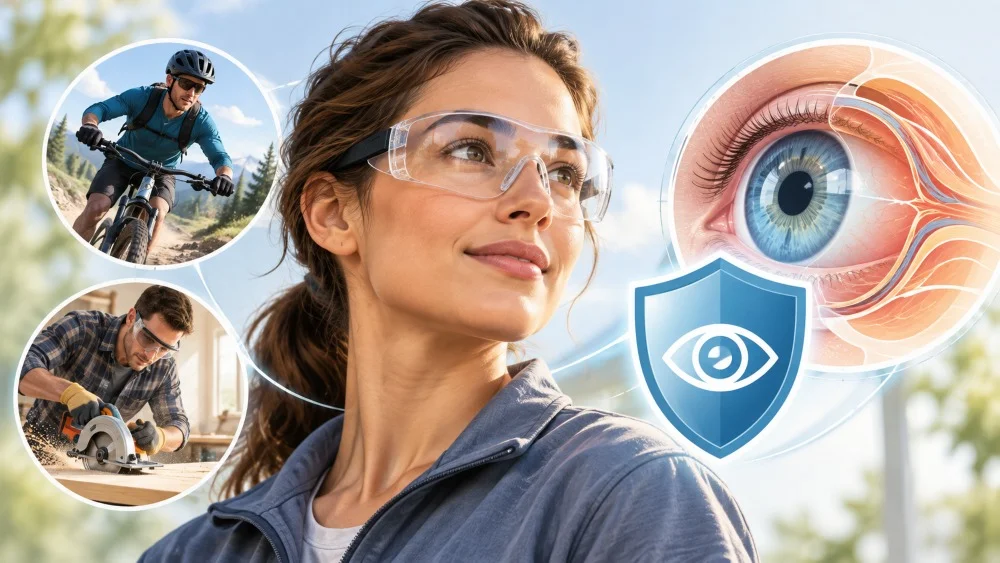
A large share of serious eye injuries happen at home rather than at work, and the overwhelming majority would have been prevented by protective eyewear that was either not owned or not worn. This is the one area where a few pounds of plastic genuinely substitutes for medical care.
Wear proper safety glasses or goggles, meaning impact-rated eyewear rather than ordinary spectacles, for:
- Drilling, grinding, sawing, hammering masonry and anything that throws fragments
- Strimming, mowing and hedge cutting, which fire debris upward at speed
- Handling oven cleaner, drain unblocker, bleach and strong detergents, since chemical burns are among the worst eye emergencies
- Jump-starting a car battery
- Squash, racquetball, badminton, paintball and airsoft, where the projectile is exactly the wrong size to be stopped by the bony socket
Two specific points worth knowing in advance, because the moment you need them is not the moment to look them up.
For a chemical splash, irrigate immediately with clean running water or saline for at least 15 to 20 minutes, holding the lids open, and keep irrigating on the way to medical care. Do not stop early to find a doctor first. The flushing is the treatment.
For an object that has penetrated the eye, do not pull it out, do not press on the eye and do not rinse it. Shield the eye with something rigid that rests on the bone around it, such as the bottom of a paper cup, and get to an emergency department.
For a blow from a ball, fist or elbow, get it checked even if vision seems fine. Blunt trauma can cause bleeding inside the eye or retinal damage that only declares itself later.
One ordinary thing also belongs here. If you have vision in only one functioning eye, treat protective eyewear as non-negotiable for all of the above. The arithmetic of risk is completely different when there is no spare.
Advice You Can Safely Ignore
Some long-running folklore clutters conversations about eye health, and letting it go frees attention for the things that matter.
Carrots do not give you better than normal vision. Vitamin A is genuinely essential, and deficiency causes night blindness and is a major cause of childhood blindness worldwide. But if you are not deficient, extra carrots add nothing. The wartime story that popularised this was a cover for radar.
Reading in dim light does not damage your eyes. It makes them work harder and feel tired. Turn the light on for comfort, not for safety.
Sitting close to the television is not harmful. In children it is often a sign of nearsightedness rather than a cause of it. Treat it as a reason to book an exam, not a reason to tell them to move back.
Eye exercises cannot change your prescription. No amount of training will reshape an eyeball or clear astigmatism, and programmes that promise to free you from glasses are selling something. Supervised exercises do help one specific diagnosed condition, convergence insufficiency, which is a narrow and real exception rather than a general rule.
Wearing glasses does not weaken your eyes. They feel essential after a while because you have stopped tolerating blur, not because your eyes have deteriorated from use. For children with certain conditions, consistent wear is actively part of the treatment.
Squinting is not damaging, it is a crude way of improving focus. It is, however, a useful signal that something needs correcting.
Crossing your eyes will not make them stick. It never has.
One clarification rather than a myth: there is no evidence that blue light from screens harms the eye, and the leading professional bodies do not recommend blue light filtering glasses for eye strain. The discomfort people feel is real, but the cause is how screens are used, not the light coming off them.
Symptoms That Should Not Wait
If you take one list away from this article, make it this one. These need urgent assessment, usually the same day, and in several cases within hours.
- Sudden loss of vision, partial or complete, in one eye or both, even if it comes back
- A shadow or curtain moving across your field of view
- A sudden shower of new floaters, or flashes of light, which can signal a retinal tear before it becomes a detachment
- Severe eye pain with nausea, vomiting, a red eye and haloes around lights, which suggests a rapid rise in eye pressure
- Any chemical splash, where irrigation starts immediately and continues on the way in
- Penetrating injury, or significant blunt trauma to the eye
- New double vision, particularly alongside a drooping lid, headache or weakness anywhere else
- A red, painful, light-sensitive eye in a contact lens wearer
- Sudden painless loss of vision in one eye in anyone over 50, especially with scalp tenderness, jaw ache when chewing or a new persistent headache, which needs same-day attention
Slower changes deserve an appointment rather than an emergency, but should not drift. Gradual blurring, increasing glare or haloes at night, straight lines looking bent, trouble adapting between light and dark, or a persistently gritty, watering eye all warrant getting looked at within weeks rather than whenever you next remember.
It is worth being honest about the limits of an article like this. General guidance describes typical patterns, not your eyes, and no amount of reading substitutes for someone looking inside them with the right equipment. Symptom checkers and online vision tests measure almost nothing about eye health, and a reassuring result from one can delay a diagnosis that mattered. If something has changed and you are uncertain, the appointment is the answer, and no eye care professional will think you wasted their time.
Frequently Asked Questions
How Often Should I Really Have an Eye Exam?
Every two years is a reasonable default for a healthy adult with no symptoms, moving to annually from around 65, if you wear contact lenses, or if you have diabetes, high blood pressure, a strong prescription or a family history of eye disease. Both major professional bodies also want a thorough baseline examination by age 40, because that is when the age-related conditions begin.
Does an Eye Exam Cost Anything?
It depends where you live and your circumstances. In the UK, NHS sight tests are free for several groups, including children, over-60s, people with diabetes or glaucoma, and close relatives of people with glaucoma. In the United States, children’s vision care is covered on most plans, and Medicaid and CHIP generally cover exams and glasses for children. Many people are already entitled to a free test and pay privately without realising it.
Can I Do Anything to Reverse Vision I Have Already Lost?
Usually not, and this is why the emphasis falls so heavily on early detection. Vision lost to glaucoma or advanced macular degeneration does not come back. Cataract is the cheerful exception, since surgery replaces the cloudy lens and restores vision reliably.
Are Eye Supplements Worth Buying?
Only for a specific group. The AREDS formulations have good evidence for people with intermediate macular degeneration, and no evidence of benefit for healthy eyes. If your eyes are healthy, spend the money on food, sunglasses with a real UV rating, and the exam.
What Single Change Helps Most?
For smokers, stopping. For everyone else, booking the examination you have been postponing. The conditions that take sight are silent, so attendance is the whole intervention.
Is It Too Late to Start Looking After My Eyes?
No. Risk from smoking falls after quitting, blood sugar control changes outcomes at any stage, and catching a condition at a moderate stage rather than an advanced one still changes what treatment can do. Protecting your eye health is cumulative, not a race you have already lost.
Medical Disclaimer
This article is general information and education only. It is not medical advice and does not replace an in-person examination by a qualified optometrist, ophthalmologist or other healthcare professional. Recommendations on eye health and vision care differ between countries and professional bodies, and they change as new evidence emerges. Do not start, stop or alter any treatment or supplement on the basis of this article alone, particularly if you have an existing eye condition or take prescribed medication. Discuss your own circumstances with a qualified clinician, and for any symptom in the urgent list above, seek medical attention immediately rather than relying on information from a website.
References
Sources consulted, accurate as of October 2026.
- American Optometric Association. Comprehensive eye exams, with recommended examination frequency for children and adults. aoa.org/healthy-eyes/caring-for-your-eyes/eye-exams
- American Academy of Ophthalmology. Get an eye disease screening by age 40. aao.org/eye-health/tips-prevention/screening
- National Eye Institute. Glaucoma: symptoms, causes, diagnosis and treatment. nei.nih.gov/eye-health-information/eye-conditions-and-diseases/glaucoma
- World Health Organization. Smoking linked to early vision loss and cataracts. who.int/news/item/20-10-2022-smoking-linked-to-early-vision-loss-and-cataracts
- National Eye Institute. About the AREDS and AREDS2 clinical trials and what the formulations do. nei.nih.gov/eye-health-information/clinical-trials/age-related-eye-disease-studies-aredsareds2/about-areds-and-areds2
- Centers for Disease Control and Prevention. Corneal infections associated with sleeping in contact lenses, MMWR. cdc.gov/mmwr/volumes/67/wr/mm6732a2.htm
- Community Eye Health Journal. Preventing myopia in East Asia, including the outdoor activity trial. ncbi.nlm.nih.gov/pmc/articles/PMC6688404
- NHS. Free NHS eye tests and optical vouchers. nhs.uk/nhs-services/opticians/free-nhs-eye-tests-and-optical-vouchers